How to Start Forex Trading for Beginners in 2026 with a Step-by-Step Foundation
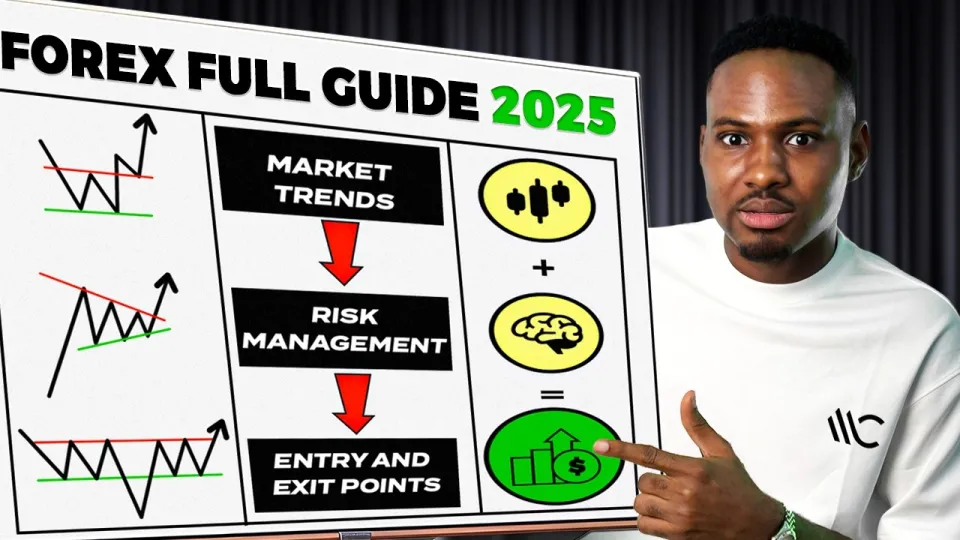
Video: How To Start Forex Trading For Beginners’ 2025 (Full Course)
Need articles like this for your video? They help promote it on YouTube and Google — order them in the Telegram bot @sat_sit_bot. The bot writes and publishes the articles itself (with your YouTube video embedded) on popular topical websites (no ads). Free trial — 50 articles.
Key takeaways
- Forex is the global currency market with daily volume around $7.5 trillion.
- Beginners should start with a demo account and risk no more than 1–2% per trade.
- MT5 is the standard platform for executing and managing trades.
- Major sessions: London, New York, Tokyo, Sydney; London–New York overlap is the most liquid.
- Jeffrey Benson Forex offers a full beginner course and free daily signals.
Forex trading for beginners starts with understanding what currency pairs are, how leverage and risk work, and then practicing on a demo account before risking real money. The goal is not to predict the market perfectly but to manage risk and follow a repeatable process. A structured beginner course, like the one from Jeffrey Benson Forex, can shorten the learning curve and help you avoid costly mistakes. For those ready to go further, Fire Pips FX plans offer a structured path with signals and education.
What forex trading is and how the currency market works
Forex is the decentralized market where national currencies are traded in pairs, and prices move based on supply and demand driven by economic data, interest rates, and geopolitics. Currencies are always quoted in pairs, such as EUR/USD, where the first currency is the base and the second is the quote. The exchange rate tells you how much of the quote currency is needed to buy one unit of the base currency. Most retail trading happens through brokers who provide leverage, allowing you to control a larger position with a smaller deposit. The forex market operates 24 hours a day, five days a week, across major financial centers: Sydney, Tokyo, London, and New York. Liquidity peaks during the London and New York sessions, especially when they overlap. Understanding these sessions helps beginners choose the best times to trade when spreads are tighter and volatility is higher. Major currency pairs like EUR/USD, GBP/USD, USD/JPY, and AUD/USD are the most liquid and widely followed. Exotic pairs involve higher spreads and risk. Beginners should focus on one or two major pairs to learn their behavior before expanding.
Tools and platforms every beginner needs
To start trading forex, you need a reliable broker, a trading platform, and a way to analyze charts and manage risk. The minimum toolkit includes:
- Regulated broker – choose a broker regulated by a tier-1 authority (FCA, ASIC, CySEC) with segregated client funds. Jeffrey Benson recommends Assex Markets in the video; you can sign up via this partner link.
- Trading platform – MetaTrader 5 (MT5) is the industry standard for forex trading. It offers charting, order execution, and automated trading. Download MT5 from your broker’s website and link it to your account.
- Demo account – practice with virtual money until you have a consistent strategy and understand platform mechanics.
- Economic calendar – track central bank meetings, inflation reports, and employment data that move currencies.
- Risk management calculator – position size calculators help you risk a fixed percentage per trade.
- Trading journal – record every trade with entry, exit, rationale, and emotions. This is essential for improvement.
A common beginner mistake is skipping the demo phase and jumping into live trading with real money before understanding how leverage amplifies both profits and losses.
Building a basic forex strategy foundation
A forex strategy is a set of rules that defines when to enter, exit, and manage a trade. Beginners should start with a simple approach based on price action and support/resistance levels. Key components include:
- Timeframe – pick one timeframe (e.g., 1-hour or 4-hour) for analysis and another (e.g., 15-minute) for entry.
- Entry trigger – a clear signal such as a breakout, a bounce from a level, or a moving average crossover.
- Stop-loss – always set a stop-loss to cap losses. A common rule is to risk no more than 1–2% of your account per trade.
- Take-profit – define a target based on risk-reward ratio, typically at least 1:2.
- Position sizing – calculate lot size so that the stop-loss distance equals your risk tolerance.
Jeffrey Benson’s course emphasizes risk management as the foundation of any strategy. Many beginners focus on entries but neglect exits and position sizing, which leads to blown accounts. A strategy does not need to be complex; it needs to be tested and followed consistently.
Placing your first trade step by step
Placing a trade on MT5 involves a few clear steps: select the currency pair, set the order type, define stop-loss and take-profit, and execute. Here is a practical sequence:
- Open MT5 and log into your broker account (demo or live).
- In the Market Watch window, right-click and select the desired pair (e.g., EUR/USD).
- Open a new order window (F9 or right-click > New Order).
- Choose order type: Market Execution for immediate entry, or Pending Order for a specific price.
- Enter the lot size (position size) according to your risk calculation.
- Set Stop Loss and Take Profit levels in the order window.
- Click Buy or Sell to execute.
After execution, monitor the trade and avoid moving the stop-loss further away from your entry. Stick to your plan. Beginners should start with micro lots (0.01) to keep risk small while learning.
Common mistakes to avoid in forex trading
Most beginner losses come from a few recurring mistakes: overtrading, risking too much per trade, trading without a stop-loss, and letting emotions drive decisions. Overtrading often happens after a loss when traders try to "win it back" quickly. Risking more than 1–2% per trade can lead to large drawdowns that are hard to recover from. Trading without a stop-loss exposes the account to unlimited loss, especially with leverage. Emotional trading – fear and greed – leads to deviating from the strategy. Another mistake is trading during major news events without understanding the potential volatility. Beginners should also avoid using high leverage without proper risk control. Jeffrey Benson’s course highlights these pitfalls and stresses the importance of discipline and a trading journal.
How much time and money you need to start
Forex trading requires an initial deposit, but more importantly, it requires time to learn and practice. A realistic starting deposit for a beginner using micro lots is $100–$500, but the focus should be on education first. You can start with a demo account at no cost. Learning the basics takes several weeks of consistent study and practice. Becoming consistently profitable can take months or years. Treat trading as a skill that requires ongoing education. Many beginners ask whether they can start with $10 or $50; while possible with micro accounts, the risk of blowing up is high because position sizing becomes very tight. It is better to practice on demo until you have a proven strategy, then start small.
Useful links from the course
- Fire Pips FX plans – structured education and mentorship.
- Free daily signal channel – one free trade idea per day.
- Assex Markets registration – broker recommended by Jeffrey Benson.
- Premium signal group – subscribe for premium signals.
Final thoughts on starting forex trading
Forex trading is a skill that combines knowledge of markets, risk management, and psychology. Beginners should start with education, practice on a demo account, and only risk small amounts when ready. The course from Jeffrey Benson Forex provides a comprehensive foundation, covering everything from market basics to placing a first trade. For those who want a guided path, Fire Pips FX plans offer additional resources and signals. Remember that consistency and discipline matter more than any single trade.
Questions & answers
How much money do I need to start forex trading?
You can start with as little as $100–$500 using micro lots, but it's more important to first practice on a demo account. Many brokers allow demo trading with virtual funds at no cost. The key is to focus on learning and risk management before committing real capital.
What is the best time to trade forex?
The best time is when liquidity is highest, typically during the London and New York sessions, especially their overlap (around 8:00–12:00 GMT). Major currency pairs have tighter spreads and more predictable movements during these hours. Beginners should avoid trading during major news releases unless experienced.
How long does it take to become profitable in forex?
It varies, but most beginners need at least 6–12 months of consistent practice and study to develop a reliable strategy. Some take longer. Profitability comes from discipline, risk management, and continuous learning, not from quick wins.
Can I trade forex with a small account like $50?
Yes, with micro or nano lots, but the risk of blowing up is high because position sizing is very tight. It's better to practice on demo until you have a proven strategy, then start with a small live account and strict risk control.
Source: How To Start Forex Trading For Beginners’ 2025 (Full Course) · Markdown version